
The workout ended hours ago. So, why do your legs still feel sluggish when you get up from your chair or walk up a flight of stairs?
Whether it is a tough training session, a cross-country flight, or a day spent at a desk, many people notice the same thing. Their legs feel heavy, sluggish, and slower to bounce back than the rest of their body.
That feeling is not always about how hard you worked. Sometimes it has just as much to do with what happened after the effort ended. And that is where the calf muscles play a bigger role in recovery than most people realize.
Why Calf Muscles and Recovery Deserve More Attention
Many people assume that sore, heavy legs are simply the result of a hard workout. But what happens after the effort ends can also play a role. Hours of sitting, whether at a desk, in a car, or on a flight, can leave the lower body feeling even more sluggish.
Part of the reason lies in the calf muscles. Every time we walk, they contract and help support blood flow through the lower legs. When movement slows, that natural support slows as well. As a result, the legs can feel slower to bounce back after long periods of inactivity.
Understanding this connection is important to understanding recovery and why the lower legs deserve more attention than they often receive.
The Calves as a Built-In Pump
Every step activates the calf muscles. As they contract and relax, they help support blood flow through the lower legs.
When movement stops, that support decreases. Hours spent sitting without much movement reduce the regular muscle activity that occurs during walking. As a result, the legs can feel heavier, less responsive, and slower to recover.
This is why the calves matter beyond running, jumping, or training. Their role extends into the recovery period as well. That is where recovery support can make a difference.
Why Calves Matter for Recovery

Recovery does not start and end with rest. After training, the body still needs oxygen and nutrients delivered to working muscles. It also benefits from continued movement support, even when the hard effort is over.
That is why many athletes notice familiar patterns after demanding sessions. Their legs feel heavy later in the day. The next warm-up takes longer than expected. Travel or desk time makes the lower body feel even flatter. Movement feels less responsive, even when energy and motivation are still there.
Often, that feeling is less about effort and more about inactivity after effort.
Recovery Does Not Stop When Movement Does
Recovery does not begin when you lie down on the couch. It begins the moment the activity ends.
After a workout, the body is still working. Oxygen and nutrients continue supporting working muscles, and the lower legs still benefit from regular movement. Yet what usually happens next? We get in the car, sit at a desk, relax on the couch, or board a flight.
That sudden shift from constant movement to almost none matters. The lower body loses some of the natural muscle activity that supports blood flow throughout the day. For many athletes, travellers, and active professionals, this period of inactivity is often why recovery feels slower than expected.
Where Firefly Fits in Recovery Support

Firefly is designed to support recovery during those periods when movement naturally decreases.
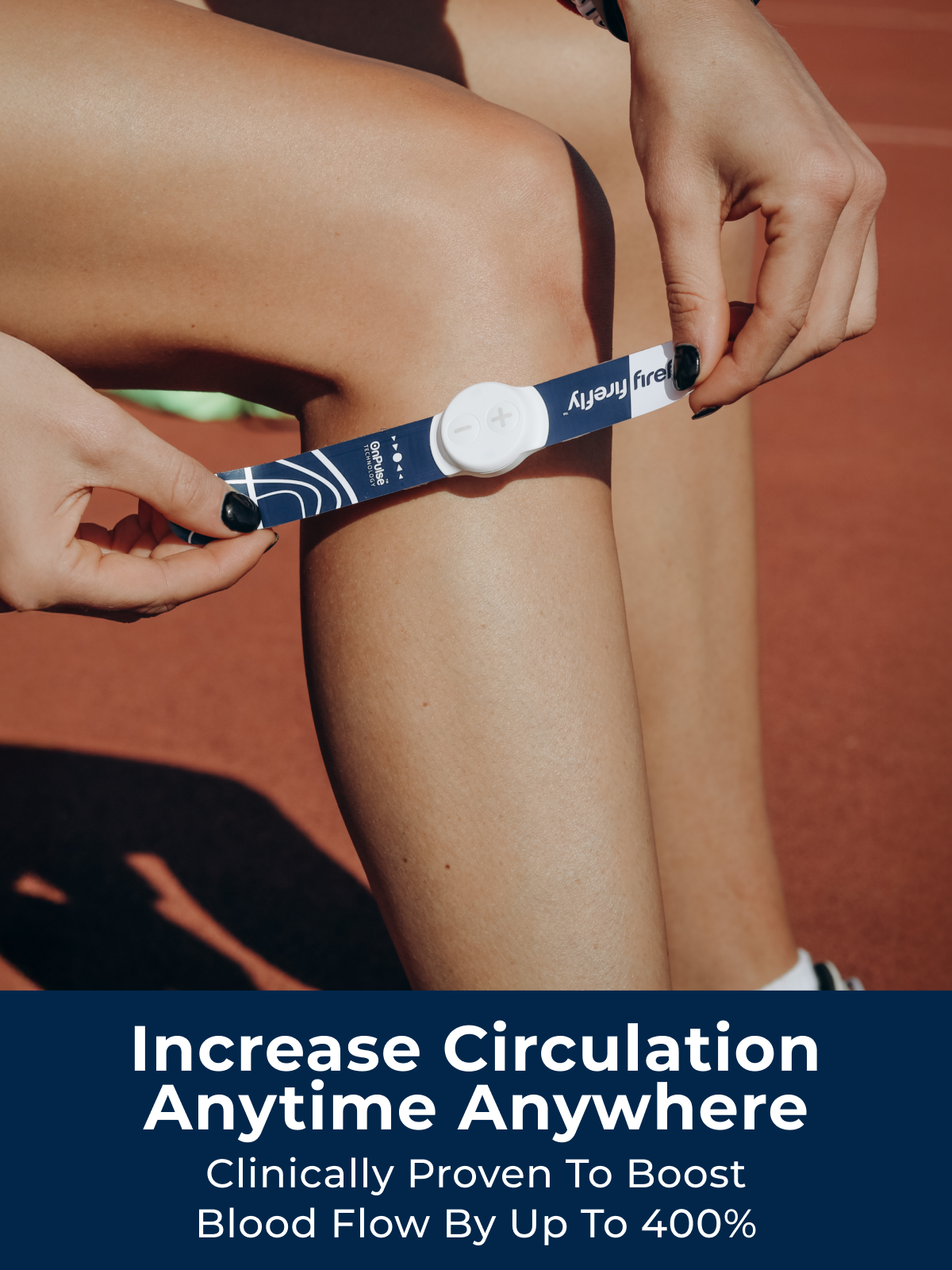
The device delivers small electrical pulses that stimulate the peroneal nerve. This creates a gentle foot flutter that activates muscles in the lower leg. According to Firefly, this action can increase blood flow by up to 400%.
Rather than replacing recovery fundamentals like sleep, nutrition, and hydration, Firefly is designed to work alongside them. It can be used while travelling, while sitting, after training, or while winding down at the end of the day.
Why Wearable Recovery Works
The best recovery tool is often the one people can use most easily and consistently.
Many recovery methods require dedicated time, equipment, or planning. Wearable recovery fits more easily into everyday routines. Instead of setting aside additional recovery sessions, athletes can support recovery while doing things they were already going to do.
That practicality is one reason Firefly has been adopted by more than 1,300 professional and college teams. Recovery support becomes easier when it moves with the athlete rather than competing for their time.


Building Recovery Into Your Routine With FireFly
Good recovery does not have to be complicated. In fact, the most effective recovery habits are often the easiest to repeat. Eat and hydrate after training, avoid complete inactivity, use seated downtime more intentionally, and ease back into movement before your next hard session.
Firefly is designed to fit into those moments between training sessions. Common use windows include 30 to 60 minutes before activity, 1 to 4 hours after workouts, and throughout travel. While it is not intended for use during training, it can be worn while walking, stretching, commuting, travelling, or relaxing, making recovery support easier to fit into everyday life.
FAQs
Why do the calves matter so much after training?
The calf muscles help support blood flow through repeated contractions during movement. When activity decreases, that support decreases too.
Why do legs feel heavy when movement drops off?
Long periods of sitting reduce regular lower-leg muscle activity, which can leave the legs feeling sluggish and less responsive.
Where does Firefly fit best: after workouts, during travel, or during the workday?
Firefly is commonly used during all three situations, especially when movement naturally decreases for extended periods.
Can wearable recovery replace sleep, hydration, or nutrition?
No. Recovery tools are designed to support the fundamentals, not replace them. Sleep, hydration, nutrition, and movement remain essential.
Why Calf Muscles and Recovery Come Down to Repeatable Habits
The calves sit at the intersection of movement, blood flow, and readiness. When movement slows down, the lower legs often feel the effects first.
That is why recovery works best when it becomes part of a routine rather than an occasional effort. Alongside sleep, hydration, nutrition, and movement, tools like Firefly can help increase blood flow, reduce soreness, and improve muscle performance.
Explore how Firefly fits into warm-up, post-workout recovery, and travel routines to see how recovery support can work in real life, not just under ideal conditions.